
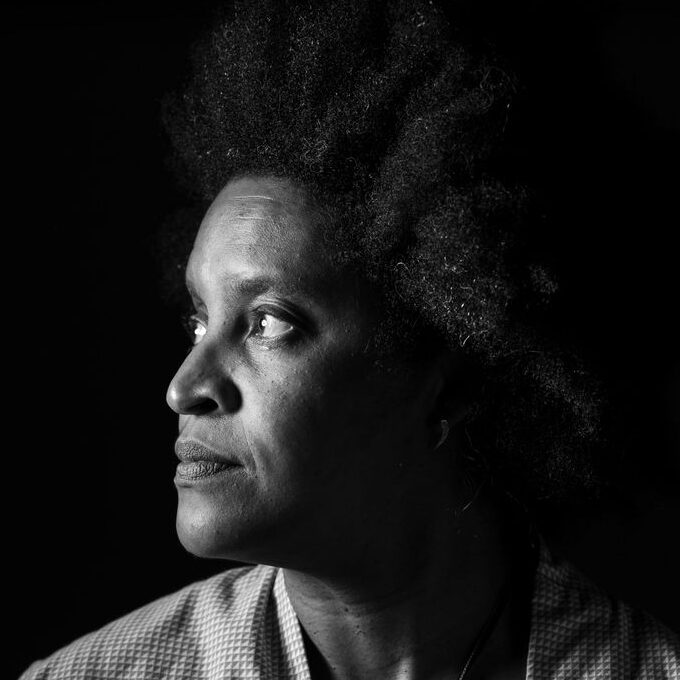
Amelia Ray is the Interpreter. Part storyteller, part musician, she has spent more than 30 years writing music with purpose—songs that ask you to pause, look closer, and examine what connects us. Born in the heart of the Silicon Valley and fluent in multiple languages, Ray writes like a witness and sings like a weapon: tender as needed, sharp when it counts.
Her work invites attention. The songs are layered, character-driven, and observational. Verses unfold like disguised love letters written from inside someone else’s life. If you’re listening closely, you’ll notice—Amelia isn’t standing outside the world describing it. She’s writing from within it.
Ray’s compositions examine what it means to be human across culture, history, and power. “Ana no potable” takes the voice of a disgruntled constituent addressing a failed mayor. “Dream” is a tribute to artistic perseverance. “Hambone Says,” a performance piece using a contemporary-past aesthetic to explore U.S. racial and musical history, earned the 2024 Global Film Exhibition award for Best Music Video. Her recent single, “Pretending to Read,” follows a woman observing strangers on a subway, blending intimacy with social commentary.
Her performances function as experiments in cultural cohesion—shifting styles and moods to reflect the complexity of lived experience. She has performed in 25 countries, appearing everywhere from intimate listening rooms to major festivals, including the National Women’s Music Festival, Silicon Valley Pride, and the NPR-syndicated *Martha Bassett Show*. In 2025, she completed a 40-show tour across the United States and Canada.
Offstage, Ray extends her work into community action. She organized and hosted 2020’s Quarantuned Music Festival in support of artists affected by COVID-19 cancellations and founded Europe for Ukraine, producing an original multilingual composition in solidarity with the Ukrainian people. She also leads financial empowerment and songwriting workshops for artists worldwide.
She approaches music not as background sound, but as a tool for empathy, cultural cohesion, and connection.